About White Spot Disease (WSD)
White Spot Disease (WSD), caused by the virus White Spot Syndrome Virus (WSSV), has become a global disease threat in both extensive and intensive shrimp farming. Penaeus monodon and P. vannamei shrimp, as well as many types of crustaceans, are susceptible to WSSV.
WSD typically kills shrimp within one month of stocking and within 2 to 3 days of infection. When shrimp farms become infected with WSSV, farmers lose upwards of 80 - 90% of their stock within 5 - 7 days. At this stage, emergency harvesting is necessary to preserve surviving shrimp. There is no treatment for WSD, so prevention is the best way to avoid the disease.
How Can I Identify WSD?
Just before a White Spot Disease outbreak, shrimp stop feeding. Within a few days, moribund shrimp appear at the edge of ponds, and then shrimp die.
Signs of infection include:
- Empty intestine and abdomen due to cession of feeding
- Lethargy
- Dirty gills
- Loose cuticle (from underlying epidermis)
- A yellowish-white and enlarged hepatopancreas
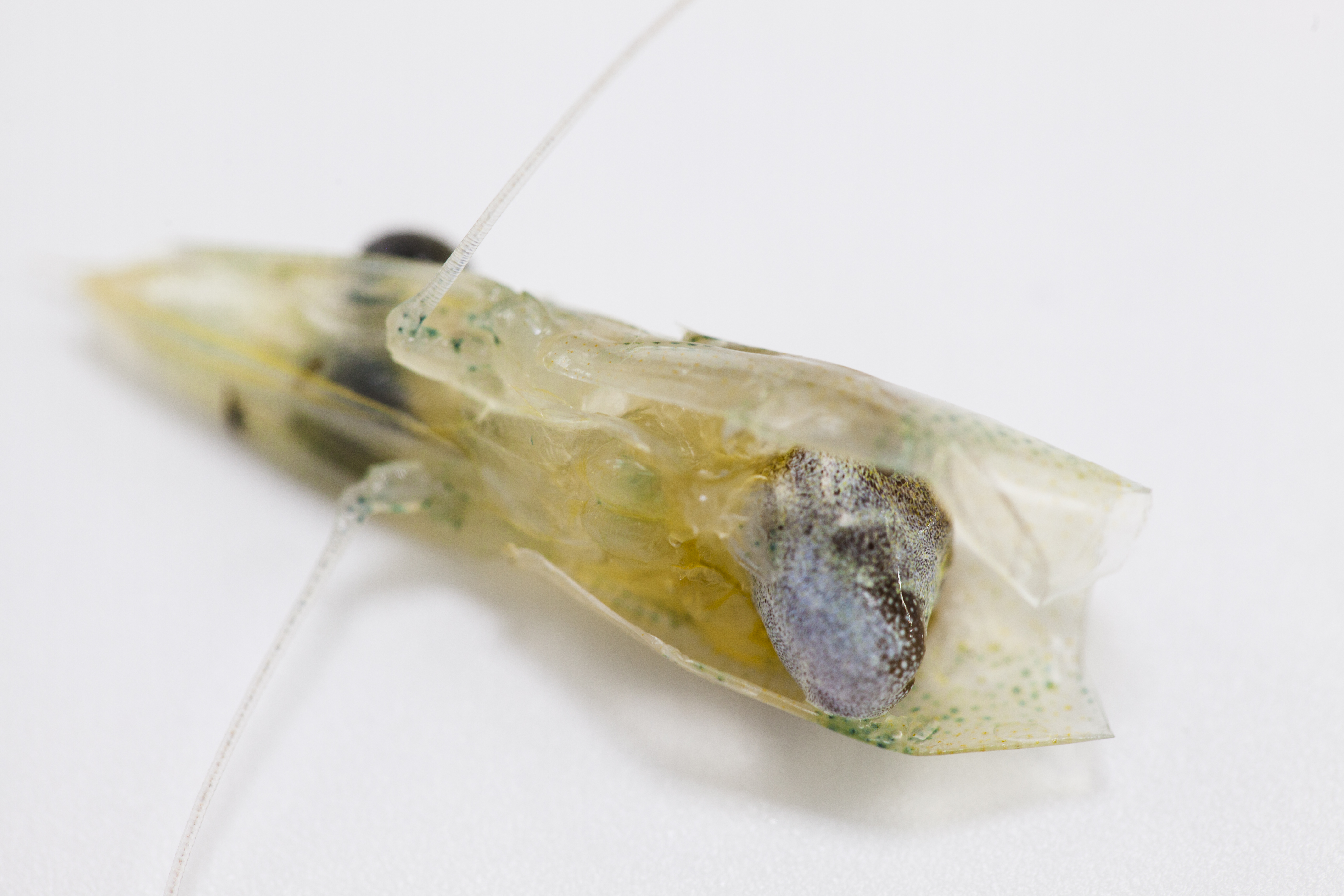
- The presence of circular white spots on the carapace and other exoskeletal parts. In some cases, white spots may not always be clearly visible in vannamei shrimp
How do shrimp get White Spot Disease (WSD?)